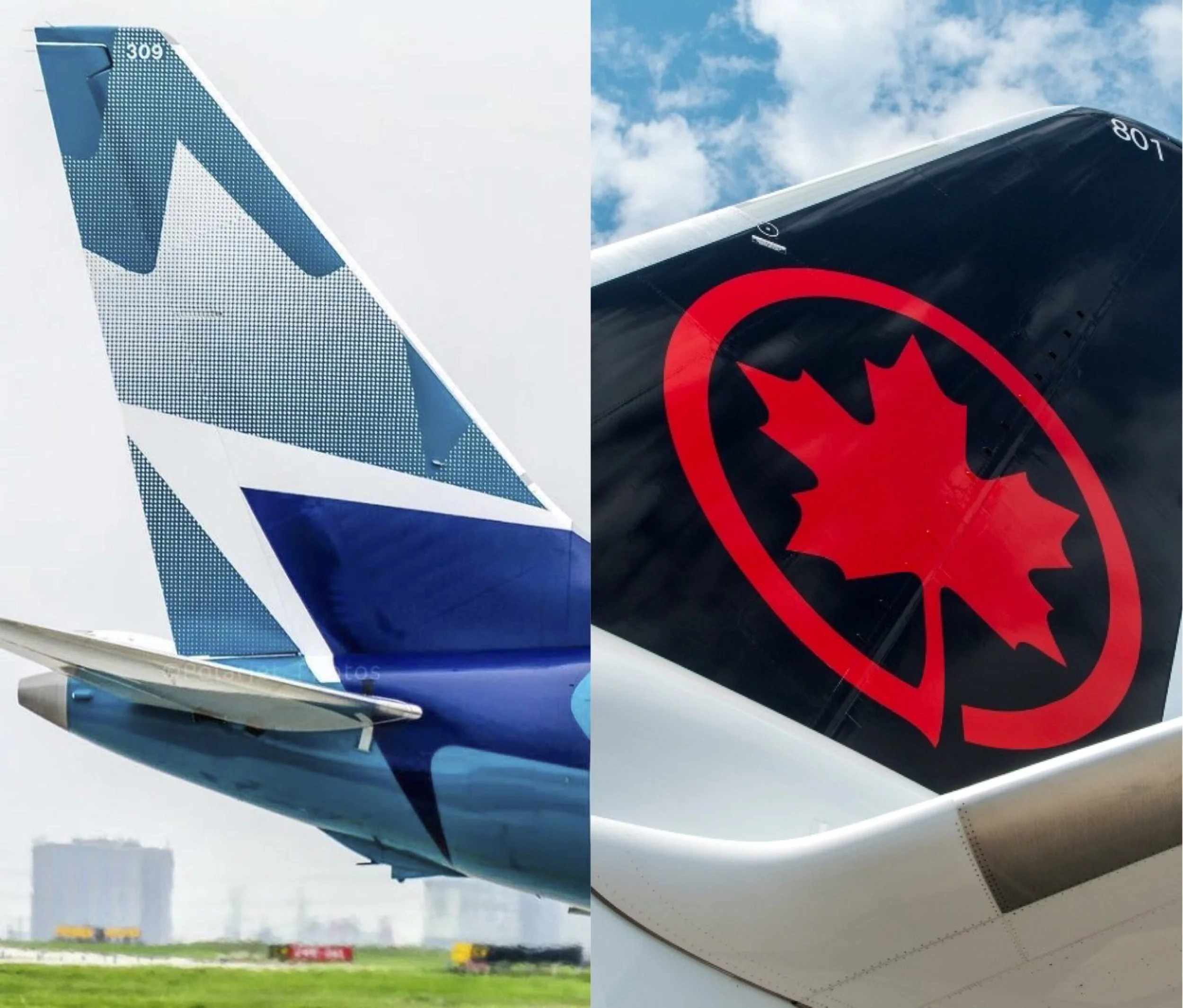
Air Canada vs WestJet: Which Airline Is BeTTER FOR CANADIANS?
March 29, 2026
If you've flown out of YVR more than a handful of times, you've probably asked yourself this question. Both airlines fly from Vancouver. Both have rewards programs. Both will get you where you're going.
But for Vancouver travellers who want to maximize the value of every dollar they spend on travel, the answer matters a lot more than most people realise.
This guide breaks down both airlines across every dimension that actually affects your experience, and gives you a clear verdict on which program deserves your loyalty in 2026.
The Short Answer
For domestic travel within BC and Alberta, WestJet is often competitive on price and perfectly adequate on service. For international travel, business class aspirations, and building long-term rewards value, Air Canada and Aeroplan win by a significant margin.
The longer answer is more nuanced. Here's the full picture.
Route Network From YVR
Air Canada operates from Vancouver to over 200 destinations worldwide including nonstop service to London, Tokyo, Frankfurt, Sydney, and dozens of other international cities. As a Star Alliance member, Air Canada tickets connect seamlessly to over 1,000 additional destinations through partner airlines.
WestJet has a more limited international network. WestJet has recently decided to focus on its core users in Alberta and British Columbia. Although they still have a presence in Ontario, they don't have much of a footprint in other parts of the country. Redbarninvestmentcounsel For international travel, WestJet has codeshare agreements with Delta, Air France, and Qantas, but the network depth is significantly smaller than Air Canada's Star Alliance membership.
Verdict: Air Canada wins clearly for international travel from YVR. WestJet is a reasonable option for domestic routes within Western Canada.
Pricing and Value
Both airlines price competitively on domestic routes and you'll often find similar fares side by side. A comparison of prices on both sites shows the two are fairly comparable. For example, a flight from Toronto to Vancouver costs $154 CAD on Air Canada and $152 on WestJet. From Toronto to Los Angeles, Air Canada is actually the cheaper option. Hardbacon
The common perception that WestJet is always cheaper is outdated. On many routes, particularly international ones, Air Canada is equally or more competitive. Always compare both before booking.
Verdict: Roughly equal on domestic pricing. Check both every time.
In-Flight Experience
Both airlines offer economy, premium economy, and business class cabins on most routes.
WestJet operates a fleet of Boeing 737s on most domestic routes and has introduced Boeing 787 Dreamliners for longer haul international service with fully flat beds in business class. The product is competitive and service is consistently regarded as friendly and approachable.
Air Canada operates a wider variety of aircraft including the Boeing 787, Airbus A330, and Airbus A220 on various routes. On long-haul international routes the Signature Class business cabin is genuinely premium with direct aisle access lie-flat beds and a strong meal service. The Air Canada in-flight entertainment system is crammed full of movies and TV shows with all the latest releases, and it basically puts the WestJet onboard entertainment system to shame.
On the service side, WestJet has historically been seen as friendlier and more personable, particularly on domestic routes. Air Canada has improved significantly in recent years and the gap has narrowed.
Verdict: Air Canada edges ahead on long-haul international routes. WestJet holds its own on domestic service.
The Rewards Programs: Where the Real Difference Lies
This is where the two airlines diverge most significantly, and where the decision matters most for your long-term travel value.
WestJet Rewards
Instead of earning points or miles, you earn WestJet dollars with WestJet Rewards. When making a redemption, one WestJet dollar is worth $1. Many people like WestJet Rewards because there's no flight rewards chart or dynamic pricing to worry about.
On the surface this sounds appealing. It's simple, transparent, and what you earn is exactly what you spend. But the simplicity comes with a significant ceiling on value.
When redeeming your WestJet dollars, they can only be applied to the base fare. That means any additional transportation charges, taxes and fees must be paid out of your own pocket. These extra fees can sometimes exceed the base fare.
The earn rate is also modest. Most WestJet purchases earn between 2% and 5% back in WestJet dollars depending on your fare class and status tier. You're essentially getting a cash back program with a 2 to 5% return.
There are limited opportunities to take an aspirational flight, such as a business class seat on a specific route. WestJet Rewards has no retail or grocery partners.
On the credit card side, there are only two co-branded WestJet credit cards. The WestJet RBC World Elite Mastercard gives you your first checked bag free and an annual round-trip companion voucher. The companion voucher has real value, particularly for couples who fly WestJet regularly, but the product lineup is thin compared to Aeroplan.
Aeroplan
Aeroplan is a fundamentally different type of rewards program. Rather than earning a fixed dollar value back on your spending, you earn points that can be redeemed for disproportionately high value when used correctly.
The key is in the redemption. Business class seats that cost $3,000 to $5,000 in cash can be booked for 55,000 to 75,000 Aeroplan points on partner airlines at fixed pricing. That's 1.5 to 2 cents per point in value, which compounds dramatically when you're redeeming for premium cabins rather than economy seats.
Aeroplan has over a dozen co-branded credit cards available across TD, CIBC, and American Express. Premium cards come with Maple Leaf Lounge access, free first checked bags for up to nine travellers on the same reservation, priority check-in, priority boarding, and NEXUS fee rebates. The credit card ecosystem is one of Aeroplan's biggest advantages since it allows you to earn points rapidly on everyday spending through the right card combinations.
Aeroplan also partners with Starbucks, Uber, Uber Eats, and hundreds of online retailers through the Aeroplan eStore, giving you additional ways to accumulate points beyond flying. Aeroplan gives you both a Status Qualifying Credit boost from card spend and a completely separate Everyday Status track, offering multiple viable paths to status including a pure spend-only route. Prince of Travel This means you can earn meaningful status benefits even without flying frequently.
The Business Class Question
This is the most important comparison for anyone who wants to eventually travel in premium cabins.
With WestJet Rewards, booking a business class seat costs WestJet dollars at roughly face value. You're essentially paying the cash price in a different currency. There is no leverage, no sweet spot, no way to get outsized value.
With Aeroplan, a business class seat from YVR to Tokyo on ANA costs 55,000 points at a fixed partner rate. A comparable cash ticket costs $2,500 to $3,500 or more. That's real leverage that WestJet simply cannot replicate.
For Vancouver travellers who dream of flying business class to Asia, Europe, or Australia, Aeroplan is the only program worth building toward. WestJet Rewards will never get you there at the same value.
Who Should Choose Each Airline
Choose WestJet if:
You fly primarily within Western Canada and want simplicity
You regularly travel with a partner and will use the annual companion voucher
You find the WestJet fare prices consistently lower on your routes
You prefer a straightforward cashback-style rewards structure with no complexity
Choose Air Canada and Aeroplan if:
You want to eventually redeem for business class or premium travel
You travel internationally from YVR with any regularity
You want to earn points on everyday spending through a strong credit card ecosystem
You want access to a global partner network of 40+ airlines
You want lounge access, priority services, and premium travel benefits
The Honest Vancouver Perspective
Most Vancouver travellers would benefit most from a hybrid approach. Book whichever airline has the best fare on any given route, since pricing is often comparable. But direct all your loyalty and all your credit card spend toward Aeroplan.
The reason is simple. WestJet Rewards is a good cashback program masquerading as a travel rewards program. Aeroplan is a genuine travel rewards program with real upside for anyone willing to learn how it works.
The value gap between the two programs is most visible when you're sitting in a lie-flat business class seat from YVR to Tokyo that cost you 55,000 Aeroplan points instead of $3,000 cash. You cannot replicate that experience through WestJet Rewards at any reasonable point accumulation rate.
The Bottom Line
Both airlines will get you where you're going. WestJet is friendly, competitive on domestic fares, and has a perfectly reasonable rewards program for travellers who want simplicity over optimization.
But if you're reading YVRPoints, you're probably not looking for simple. You're looking for the approach that gives you the most travel for the least money over time. For that purpose, Aeroplan is not a close call.
Build your points in Aeroplan. Use whichever airline has the best fare on any given day. And save your points for the redemptions that matter.
If you want to know when those redemptions open up from Vancouver, subscribe below and we'll make sure you never miss one.
